Connectors Used on RF Boards
RF boards (radio frequency printed circuit board) need specialized connectors that are designed to work in a variety of environments. This includes shock and vibration, temperature extremes, humidity, and more. The main goal is to achieve good performance in hostile conditions with minimum losses and reflections. This is achieved through a combination of factors including fine machining and finishing, plating, and automated assembly.
The first aspect that is considered is the dielectric used to form the insulator around the conductors. This is usually PTFE (polytetrafluoroethylene) but may be other materials depending on the application. This is combined with suspension insulators that provide mechanical support and to minimize shorts between conductors. Conductors themselves are generally brass with gold or silver plating. The metallurgy of the conductors is also important as it will influence the transmission speed and shielding of the signal.
The coaxial connector, which is often used on rf board, has an inner conductor enveloped by a concentric conducting sleeve with the shield and conductor separated by an insulating material. This provides minimal loss and good isolation between the conductors and signal paths. Coaxial connectors come in many different versions and can be either male or female.
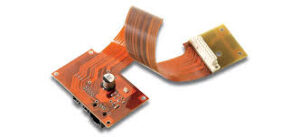
Types of Connectors Used on RF Boards
An inexpensive and common RF connector is the BNC, which is named for its bayonet-style retainer and two inventors. It can be found in many equipment, including oscilloscopes, amplifiers, and signal generators. It is not recommended for use with frequencies above 3GHz, as it can become an accidental radiator at this level.
Another type of RF connector is the SMA (Small-Audio/Video) connector, which is often used in home video and audio applications. It can be found on consumer TVs and cable boxes as well as some video and PA systems. This connector is similar to the BNC but with a lower frequency limit of 200MHz and a non-constant impedance.
Finally, there is the RCA (Cylindrical Radio-Audio Connector) connector, which can be found on televisions, some portable audio equipment, and some microphones. This connector has a non-constant impedance and a maximum frequency of 30MHz, which makes it less than ideal for most professional applications.
Besides the different types of connectors, it is also important to consider how the connectors are terminated. Some have a screw-on method, while others use snap rings or other quick mate techniques. The termination will determine how the RF connector is mounted on a PCB and how much torque can be applied to the connections.
The most common termination for RF connectors is soldering, but other methods such as crimping, press-fit, and wire wrap can be used. The RF connectors must be properly mated to avoid signal degradation and other problems. It is important to note that different connector families have different tolerances, so caution should be taken when mating them. It is preferable to mate the plug of the more expensive connector to the receptacle/jack of the less expensive one whenever possible. Otherwise, the connections may not be fully engaged and could have poor performance or even damage the circuitry.