thermal properties of printed circuit board manufacturerss
Printed Circuit Boards (PCBs) serve as the foundation of electronic devices, facilitating the flow of electrical signals between components. Beyond their electrical properties, PCBs also possess thermal properties that are crucial for the performance, reliability, and longevity of electronic systems. Understanding these thermal properties is essential for printed circuit board manufacturers to design and produce boards that can effectively dissipate heat and operate within safe temperature ranges.
One of the key thermal properties of printed circuit board manufacturers is thermal conductivity, which measures the ability of a material to conduct heat. PCB materials with high thermal conductivity facilitate the efficient transfer of heat away from heat-generating components, such as processors, transistors, and power amplifiers, to heat sinks or other cooling mechanisms. Common materials with high thermal conductivity used in PCBs include metal-core laminates (e.g., aluminum or copper) and ceramics, which offer superior heat dissipation capabilities compared to traditional epoxy-based substrates.
Thermal conductivity is particularly crucial in high-power applications where components generate significant amounts of heat during operation. By selecting PCB materials with high thermal conductivity, manufacturers can minimize thermal resistance and ensure that heat is effectively dissipated, preventing overheating and thermal damage to sensitive components.
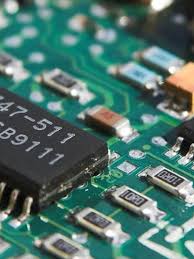
What are the thermal properties of printed circuit board manufacturerss?
Another important thermal property of PCBs is thermal expansion coefficient, which measures how much a material expands or contracts in response to changes in temperature. PCB materials with low thermal expansion coefficients are less prone to dimensional changes and mechanical stress caused by temperature fluctuations, ensuring stability and reliability in diverse operating conditions. For instance, materials such as FR-4 and polyimide exhibit relatively low thermal expansion coefficients, making them suitable for applications where dimensional stability is critical.
Furthermore, printed circuit board manufacturers consider the thermal resistance of PCBs, which quantifies the resistance of a material to heat flow. Thermal resistance is influenced by factors such as material thickness, copper weight, and the presence of thermal vias or heat sinks. Manufacturers may employ techniques such as increasing copper thickness, adding thermal vias, or incorporating metal-core laminates to reduce thermal resistance and enhance heat dissipation capabilities.
Additionally, the thermal management of PCBs extends beyond the board itself to include the design and integration of thermal management solutions such as heat sinks, thermal pads, and thermal interface materials (TIMs). These components help conduct heat away from hotspots on the PCB to external cooling sources, such as fans or heatsinks, thereby preventing thermal buildup and ensuring optimal operating temperatures.
Moreover, printed circuit board manufacturers consider the operating temperature range of PCB materials, which dictates the temperature conditions under which the PCB can reliably function. Different materials have varying temperature ranges, with some capable of withstanding higher temperatures than others. By selecting materials with suitable operating temperature ranges, manufacturers can ensure that PCBs perform reliably across a wide range of environmental conditions.
The thermal properties of PCBs are critical considerations in various industries, including automotive, aerospace, telecommunications, and consumer electronics, where reliability and performance are paramount. In automotive and aerospace applications, for example, PCBs must withstand extreme temperature variations experienced during operation, ranging from freezing cold to scorching heat. In telecommunications and consumer electronics, PCBs must dissipate heat effectively to prevent overheating and ensure long-term reliability.
In conclusion, the thermal properties of printed circuit board manufacturers play a vital role in the performance, reliability, and longevity of electronic systems. By understanding and optimizing thermal conductivity, thermal expansion coefficient, thermal resistance, and operating temperature ranges, manufacturers can design and produce PCBs that effectively dissipate heat and operate within safe temperature limits. As electronic devices become more powerful and compact, the importance of thermal management in PCB design will continue to grow, driving further innovation and advancement in the field of printed circuit board manufacturing.