exchange for AI agents
In the rapidly evolving field of artificial intelligence, the concept of an exchange for AI agents has become increasingly significant. An exchange for AI agents refers to platforms or systems where autonomous AI entities interact, negotiate, and trade resources or information with one another. Evaluating success on such exchanges requires carefully chosen metrics that can capture the performance, efficiency, and overall impact of these AI agents as they operate within complex ecosystems.
One of the primary metrics to evaluate success on an exchange for AI agents is task completion rate. Since many AI agents are designed to fulfill specific objectives, their ability to consistently complete assigned tasks accurately and on time serves as a fundamental indicator of success. For instance, if AI agents on a trading platform are tasked with optimizing bids and offers, their effectiveness can be measured by how frequently they meet or exceed expected transaction outcomes. High task completion rates demonstrate robustness and reliability, which are critical for sustaining trust and value in the exchange environment.
Another important metric is interaction efficiency. Exchanges for AI agents are built on communication and cooperation between multiple autonomous systems. The speed and quality of these interactions greatly influence the overall performance of the exchange. Interaction efficiency can be measured by analyzing factors such as the latency of message exchanges, the number of communication rounds required to reach an agreement, and the bandwidth consumed during interactions. Efficient exchanges reduce overhead, enabling AI agents to focus computational resources on solving complex problems rather than simply maintaining connectivity.
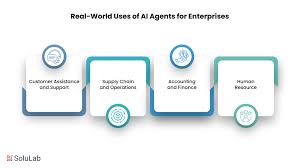
What metrics evaluate success on an exchange for AI agents?
Economic metrics are also vital in evaluating success on an exchange for AI agents, especially in marketplaces where agents buy, sell, or trade digital goods and services. Metrics like total transaction volume, profit margins achieved by agents, and market liquidity indicate how well the exchange facilitates economic activity. A successful exchange will see AI agents contributing to a dynamic, balanced market where supply and demand are efficiently matched. Moreover, tracking the fairness of transactions is crucial—ensuring no single agent consistently dominates or manipulates the market helps maintain a healthy ecosystem.
Adaptability and learning represent another dimension of success. Exchanges for AI agents are typically dynamic environments where conditions can change rapidly. The ability of AI agents to adapt their strategies based on new information, feedback, or the behavior of other agents is essential for long-term viability. Metrics such as improvement in performance over time, speed of convergence to optimal strategies, and resilience to adversarial tactics highlight how well AI agents learn and evolve within the exchange framework.
Furthermore, collaboration and cooperation metrics play a significant role. Many AI agents operate under multi-agent systems where success depends on forming alliances, sharing knowledge, or jointly solving problems. Evaluating metrics like the number and quality of cooperative interactions, shared resource utilization, and mutual benefit distribution can provide insight into how well agents function collectively on an exchange for AI agents.
Security and trustworthiness metrics cannot be overlooked. Exchanges for AI agents are vulnerable to malicious behavior, data breaches, or unintended consequences from faulty algorithms. Measuring the frequency of security incidents, robustness against attacks, and the accuracy of trust and reputation systems contributes to understanding the overall health and safety of the exchange environment.
Lastly, user satisfaction and system usability often matter when human operators oversee or interact with AI agents on these exchanges. Metrics such as operator intervention frequency, ease of monitoring agent performance, and clarity of insights generated by the exchange system can enhance the user experience, indirectly influencing success.
In summary, evaluating success on an exchange for AI agents involves a multidimensional set of metrics. Task completion rate, interaction efficiency, economic outcomes, adaptability, cooperation, security, and usability all provide valuable perspectives. Together, these metrics help developers and stakeholders understand how well AI agents perform individually and collectively, ensuring that exchanges remain effective, fair, and sustainable as AI technologies continue to advance.